
Drink 2 liters of water, write your gratitude journal, do yoga in the morning… Everybody tells us these rituals are the path to wellbeing. Most of the time, we do them. And yet, sometimes you feel like something is missing. What if the thing no one puts on the list, the thing that actually makes you feel alive, is playtime for adults? Discover more about the benefits of play for adults in this article.
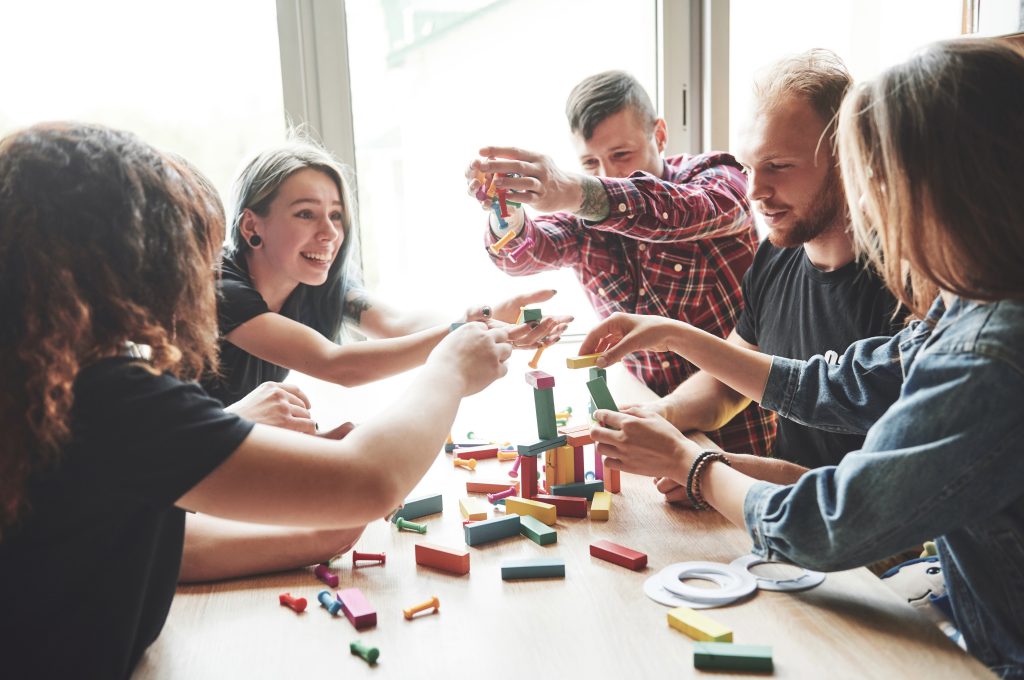
Key takeaways: Playtime for Adults
- Play is a biological and emotional need
- Modern self-care is often passive and solo activity; play is active, social and generative
- The power of play for adults builds empathy, creativity and resilience
- Shared play experiences are especially powerful for connection and mental health
- Playing regularly releases dopamine, lowers stress and keeps your brain sharper than any wellness app ever could
Why Playtime for Adults Matters More Than Self-Care
Do you sometimes feel that you have already tried everything that influencers recommend to you: 8 hours of sleep, ginger shot, healthy diet, facial massage, spa bath, yet you are still exhausted and feel that you lack new ideas in your daily life? The thing is passive self-care could not restore aliveness alone.
These rituals help, genuinely, especially for you to relax for a moment. But they are maintenance, not medicine. Playtime for adults is more than just a break from your routine; it is a neurological reset. A routine break pauses the stress; play actively replaces one with cognitive flexibility and joy, providing a deep sense of renewal that passive rest simply cannot reach.
What is Play as an Adult? Understanding Adult Play
Most of us were never really taught how to play as an adult. We just sort of… stopped. According to Dr. Stuart Brown, psychiatrist and founder of the National Institute for Play, play is “something done for its own sake, voluntary, pleasurable, and where the act itself is more important than the outcome.” Unlike exercise that you do as a commitment to achieve your goal, for example, a dream body, people play just out of the sake of it. Play is supposed to bring joy and don’t overwhelm you.
What is Kidulting?
Kidulting is a mainstream cultural movement where adults are actively reclaiming their permission to play by visiting ball pits, escape rooms and immersive art spaces as a conscious pushback against the “work hard, rest later” mentality that defines modern life. It reflects a deeper psychological shift: as burnout has become the norm, more adults are turning to sensory, playful experiences as a genuine strategy for mental resilience.

The Power of Play for Adults: What Science Says
If you don’t let your mind recharge, you will dive into your problems, and eventually it can lead to detrimental consequences for health. Without regular playtime for adults, we become more rigid in our opinions, a little less curious, and social activities are starting to feel more overwhelming. That is what is scientifically called play deprivation.
The British Holistic Medical Association states that play is arguably the most effective and underused form of self-care available to adults. Play activates the brain’s reward system and releases dopamine. This chemical relates to our motivation, pleasure, happiness, and creative thinking. By prioritizing play as an adult, people reduce cortisol levels that are linked to stress, improving cognitive flexibility, and strengthening social engagement.
The 3 Elements of Effective Playtime for Adults
Not all plays are created equally. The most restorative and beneficial playtime for adults tends to share three core elements:
- Novelty: new environments and unexpected experiences, fueling curiosity and mental sharpness.
- Social Interaction: play shared with others amplifies its benefits, deepening connection and building empathy in ways solo activities simply cannot.
- Sensory Engagement: when your senses are actively stimulated through movement, texture, light, sound, your brain is fully present, which is the foundation of genuine play.
Why Self-Care Falls Short, and Play Doesn’t

Most self-care is a solo activity. You do it alone, for yourself, by yourself. But a lot of what actually drains us isn’t just stress. It’s a disconnection. From other people, from spontaneity, from the version of ourselves that doesn’t have seventeen tabs open.
Play has been shown to foster empathy, help us navigate complex social situations, and sit right at the core of creativity and innovation. These aren’t soft qualities. They’re the skills that make people better at relationships, better at work, better at basically everything. And unlike a face mask, shared play gets you out of your own head and into real connection with other people.
Best Types of Playtime for Adults
There are many fun things to do for adults that go beyond typical wine and dine. Play can be seen in different forms nowadays: social, creative, sensory, exploratory, physical. Escape and quest rooms, playing board games with your friends, building LEGO, making something with clay are among them.
The best playtime for adults is that combines social and sensory forms. Immersive art spaces like IKONO and interactive installations are a perfect choice for that. You can wander around different rooms, without any skills or previous knowledge, just genuinely absorbing.
Curious what this looks like in real life? Explore IKONO’s immersive experiences and see why groups keep coming back.
How to Add More Playtime Into Your Adult Life
Have you ever wanted to jump into a pool full of balls? Walk through a real bamboo forest? Or play with light until you’ve drawn something with it, just like that? The kind of thing you would have done without thinking twice as a kid.

It turns out there are playgrounds for adults too. IKONO is exactly that kind of space. Designed for curiosity, built for play, and honestly more fun than most things on your self-care list.
“We see people walk in as a group of individuals and walk out as a proper team. This is the power of play for adults. Faster than any team lunch ever could.” – IKONO
Book your IKONO experience and make your life a little more creative, a little more alive.
Power of Play FAQ
What is playtime for adults and why is it important?
Adult play is any activity that is voluntary, enjoyable, and done for its own sake. It builds empathy, fuels creativity, and lowers stress, making it one of the most effective and underused tools for adult wellbeing.
How is play different from self-care?
Self-care keeps you functioning. Play reminds you that functioning isn’t the same as living.
What are the best playful activities for adults in groups?
Immersive experiences, creative workshops, escape rooms, sensory art spaces, board role-play games. The key is shared novelty, something none of you have done before.
How often should adults make time for play?
Even one or two intentional play experiences a month can shift your mood, creativity and sense of connection in ways you’ll notice.
What is Kidulting?
Kidulting is the trend of adults participating in “child-like” activities: ball pits or nostalgic games, to reduce stress and reconnect with their sense of wonder.
How can adults include more playtime in daily life?
The easiest way to play as an adult is to join a shared, immersive experience where the environment gives you permission to be spontaneous and messy.
Try something that doesn’t feel like self-care.
Sofiia Demchuk is a Marketing & Content Specialist with a passion for communication and the art of storytelling. At IKONO, she writes about immersive experiences, playful adulting activities, and things to do in major European cities.