Play isn’t a distraction, it’s a powerful stress regulation.
Play and stress relief is becoming more and more important in a world where stress feels constant. Work, screens and routines that never really stop push most of us turn to “switch off” through scrolling, watching or zoning out. While these habits fill time, they don’t always reset how we feel.

That’s where active play comes in: not as something childish, but as a real form of stress regulation through play, movement and immersion. More adults are rediscovering the power os play and stress relief through the rise of kidulting and immersive experiences.
- Play supports real stress regulation through play, not just distraction
- Emotional reset comes from movement, interaction and immersion
- Passive entertainment rarely creates full mental disconnection
- The science of play and stress relief that adults experience today shows measurable mental benefits
- Dopamine play experiences help improve mood, energy and focus
Play and Stress Relief: Regulation, not just fun
Play is often treated as something optional, something extra you do once everything else is finished. In reality, play and stress relief it has a direct on how we process stress.
When you play, attention shifts away from repetitive thoughts and toward interaction, movement and presence. The body responds differently, the mind becomes more focused, and stress levels begin to decrease.
This is why play and stress relief is becoming more relevant for adults today. It’s not about escaping reality, it’s about interrupting stress patterns and creating moments of real engagement.
The science is clear: Immersive and interactive experiences help regulate emotional overload in ways passive entertainment often can’t. Effective play and stress relief requires participation, not just observation.
What Happens in Your Brain When You Play
When people play, the experience doesn’t just affect emotions, it also changes how the brain and body respond to stress. Movement, interaction and sensory engagement activate systems connected to focus, motivation and emotional regulation.
This is why immersive interactive experiences often feel more energising and mentally refreshing than passive forms of entertainment.
The science behind play and stress relief

Play isn’t just emotional, it’s biological.
When you play, the brain activates multiple systems connected to reward, focus and emotional regulation. Dopamine levels increase, cortisol levels decrease and the nervous system begins to shift into a calmer state.
- Dopamine release supports motivation and positive emotion.
- Lower cortisol levels help reduce stress and mental fatigue.
- Movement and interaction improve engagement and focus.
- Sensory immersion increases present-moment awareness.
This is why dopamine play experiences often feel energising, memorable and emotionally different from passive forms of entertainment.
The science of play and stress relief confirms that these biological shifts create lasting benefits. How play reduces stress is closely connected to participation:
- Movement breaks mental loops.
- Engagement shifts attention away from stress.
- Immersion creates full presence.
When you play, your brain releases dopamine, the chemical linked to pleasure and motivation. At the same time, cortisol (the stress hormone), starts to decrease. That shift creates a sense of relief, clarity and energy.
Watching something may create temporary distraction, but immersive activites activate attention, movement and emotion all at once. This makes play and stress relief gfar more effective for long-term wellness.
Why passive entertainment doesn’t fully reset you
Most adults try to relax in similar ways: scrolling, streaming and spending hours moving between screens. It can feel comforting in the moment, but it rarely creates a full reset. Here is how passive entertainemtn compares to active play:
| Aspect | Passive Entertainment | Active Play |
| Engagement | Low | High |
| Mental Reset | Temporary distraction | Deep emotional reset |
| Effect on Stress | Short-term | Longer-lasting relief |
| Brain & Body Activation | Minimal | Full sensory and movement |
Why passive entertainment feels different from play
Passive entertainment doesn’t fully engage the senses or interrupt mental overload. Even while “relaxing”, the brain often remains overstimulated and emotionally active.
Play works differently. It creates interaction instead of observation. It encourages movement, curiosity and participation which naturally shifts attention away from stress loops and back into the present moment.
Passive entertainment: short term distraction, low engagement, mental fatigue.
Active Play: emotional reset, sensory immersion, present momet focus.
This difference is what makes stress regulation through play feel more effective and lasting.
Why play is making a comeback for adults
Adults are craving real, physical and emotionally engaging experiences again.
Routines have become more repetitive, screen time continues to increase, and many forms of entertainment now feel passive by default. As a result, more adults are actively searching for ways to diseconnect from constant stimulation and reconnect with themselves through play and stress relief.
Cities like Barcelona, Copenhagen and Madrid are seeing growing demand for immersive play spaces, combining culture, social connection and stress relief.
This shift reflects a growing understanding of how play reduce stress, not through avoidance, but through presence, interaction and movement.
More adults are choosing activities that allow them to participate instead of simply observe, reflects on why play and stress relief matters more than ever today. Experiences built around curiosity, immersion and emotional engagement are becoming a stronger part of how people spend their free time.
It’s more than just fun, it’s a reset.

How play creates emotional release
Play may look simple on the surface, but the emotional impact goes deeper than entertainment alone.
There’s often an immediate shift in energy. People feel lighter, more present and mentally disconnected from routine. Instead of overthinking, they react naturally, move freely and become immersed in the moment itself.
“It’s not just about what you see. It’s about what you feel, explore and experience in the moment”.
This is what makes play as stress relief feel so different from passive forms of relaxation. The body becomes involved, the senses activate and attention moves fully into the experience.
That emotional release often continues even after the experience ends, many people leave feeling mentally lighter and more connected to themselves.
Real-life examples of stress regulation through play
Stress regulation through play already exists in everyday experiences, it just isn’t always recognised that way.
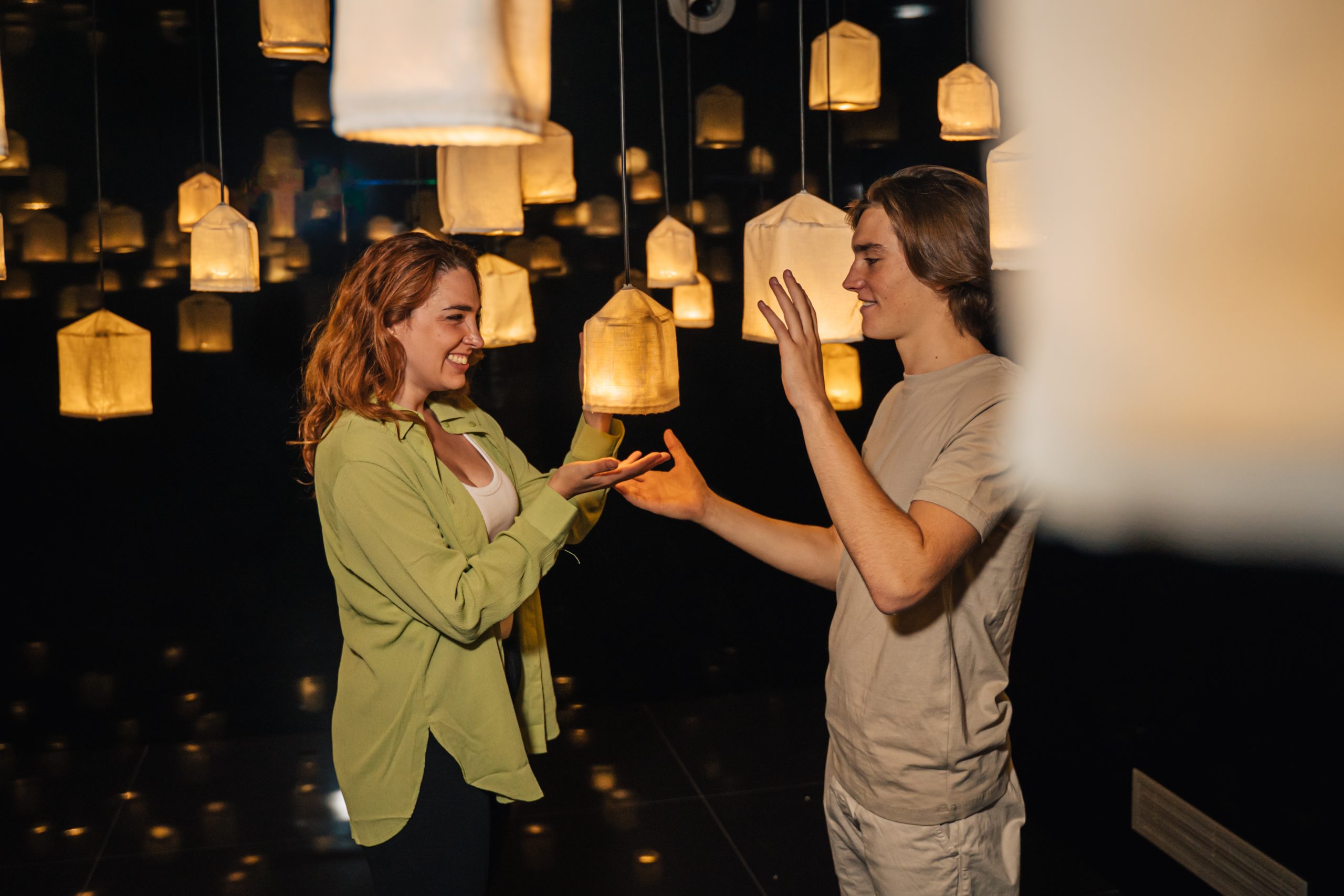
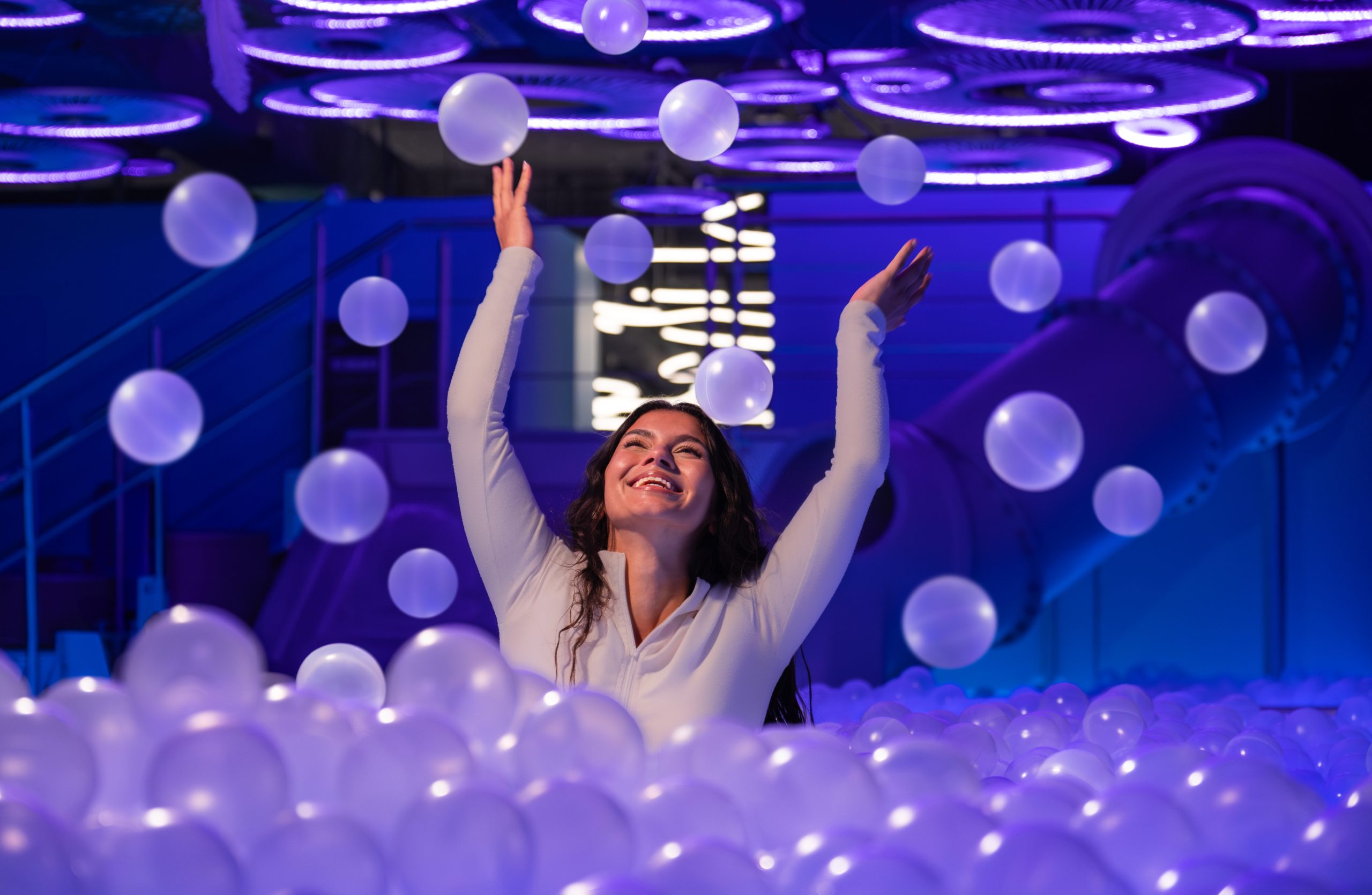
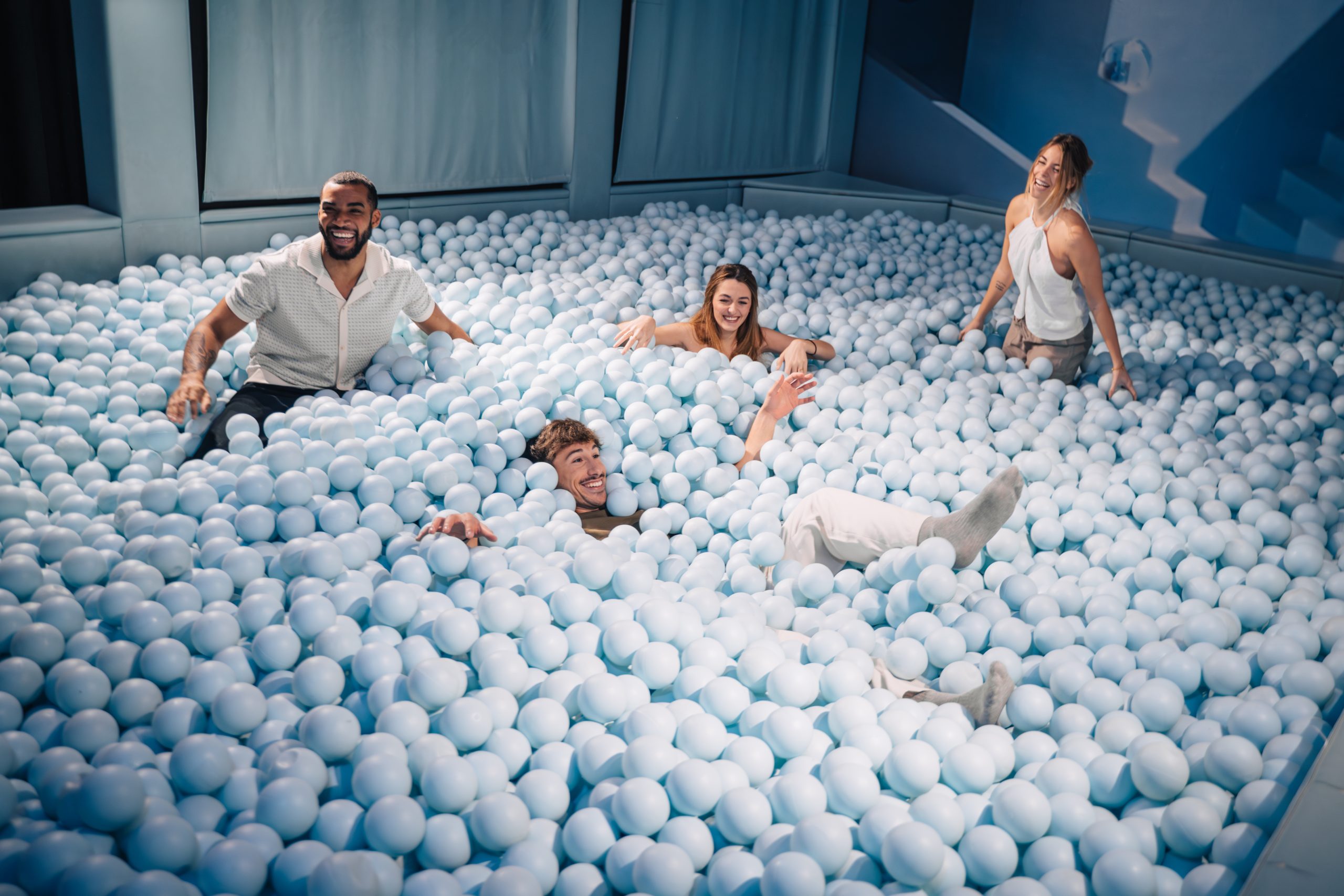
It can look like jumping into a ball pit, exploring a mirror room, laughing through a shared activity or interacting with a fully immersive environment. The magic is not watching, it is participating.
That’s what makes immersive environments feel so effective when it comes to play and stress relief for adults today. They combine movement, sensory immersion, interaction and emotional engagement into something people can physically experience, not just passively consume.
“At IKONO, we designed spaces where adults can disconnect from routine and reconnect through play and sensory immersion”.
👉 Ready to experience the benefits of immersive play? Explore IKONO immersive experiences.
Frequently Asked Questions about play and stress relief
Is play really effective for stress relief?
Yes. Play helps reduce cortisol while increasing dopamine and engagement. Unlike passive entertainment, active participation supports emotional regulation and creates a more effective mental reset.
Why does play feel more effective than scrolling or watching TV?
Because play involves movement, interaction, and presence. Passive entertainment may distract temporarily, but active experiences engage the brain and body at the same time, helping interrupt stress patterns more effectively.
What examples are there of stress regulation through play?
Examples include immersive experiences, interactive exhibitions, movement-based activities, creative workshops, and sensory environments that encourage participation and emotional engagement.
How does dopamine connect to play?
Dopamine is a neurotransmitter linked to motivation, reward and positive emotion. Dopamine play experiences activate these systems naturally, which is one reason playful activities often feel energising and emotionally uplifting.
Why are immersive experiences effective for stress relief?
Immersive experiences for stress relief work because these environments combine sensory engagement, movement, interaction, and emotional presence into one experience, helping people disconnect from routines and reconnect with the moment.
Ready to experience the benefits of immersive play for yourself?
Step into a world of sensory immersion, movement and discovery.
Book your IKONO experience now.
Author bio
Lourdes Rossi is a PR Specialist and Content Writer focused on immersive storytelling, creativity, and cultural trends. At IKONO, she creates editorial content around play, sensory experiences and experiential entertainment across Europe.